The investigational once-weekly drug retatrutide produced substantial weight loss and improved glycaemic control in adults with obesity or overweight and type 2 diabetes in the Phase 3 TRIUMPH-2 trial.
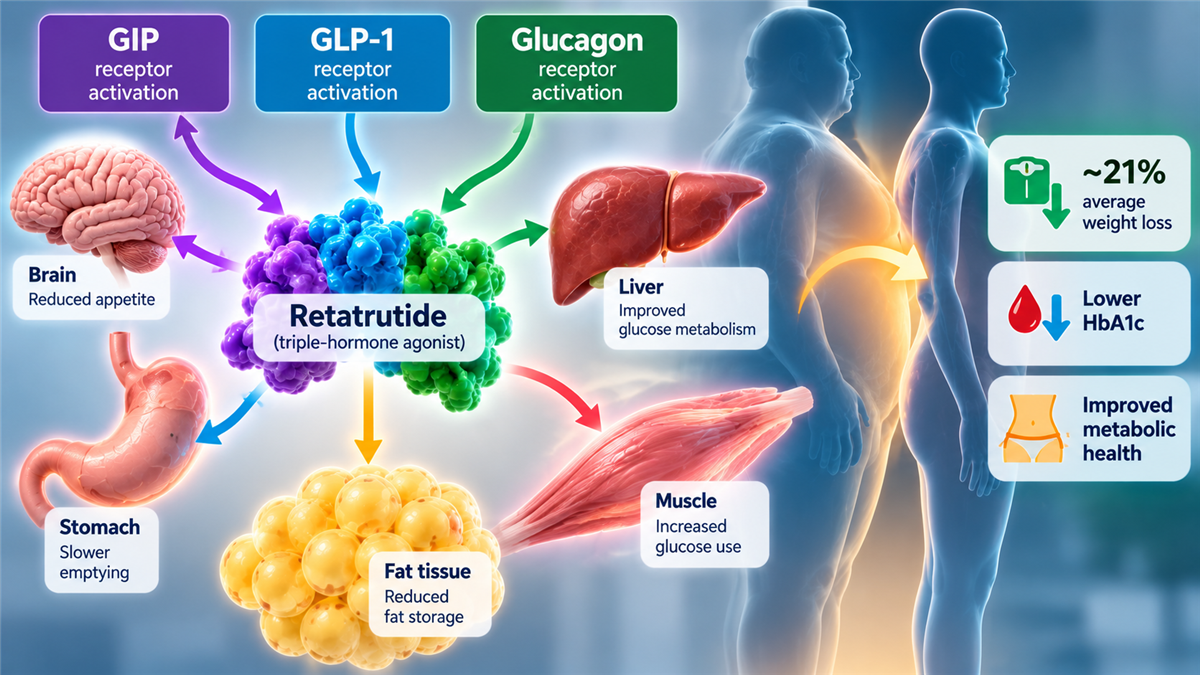
Retatrutide is called a triple hormone-receptor agonist because it activates GIP, GLP-1 and glucagon receptors. This distinguishes it from medicines that target only GLP-1 or the combined GIP and GLP-1 pathways.
TRIUMPH-2 was an 80-week randomised, double-blind, placebo-controlled Phase 3 study. Participants had type 2 diabetes and obesity or overweight, with an average starting body weight of about 106.4 kg and body-mass index of 38.2 kg/m².
At the highest studied maintenance dose, 12 mg once weekly, participants lost an average 20.8% of their body weight over 80 weeks, equivalent to about 22.5 kg. Average losses were 12.7% with 4 mg and 19.1% with 9 mg, compared with 4.0% with placebo.
Retatrutide also reduced HbA1c and improved glycaemic control. This must not be confused with an increase in HbA1c: lower HbA1c generally reflects lower average blood glucose.
Gastrointestinal adverse effects such as nausea, diarrhoea and vomiting were among the important tolerability issues, as commonly seen with incretin-based medicines. Results from a controlled trial do not by themselves establish long-term cardiovascular benefit or safety in every patient group.
Retatrutide remains investigational and is not an approved obesity or diabetes treatment. The 20.8% figure applies specifically to the 12 mg group, the studied population with type 2 diabetes and obesity or overweight, the 80-week duration and this Phase 3 trial.
Regulatory review and additional evidence will determine whether the benefits outweigh the risks and how retatrutide might eventually be used in clinical practice.