The investigational oral drug safiglipron improved blood-glucose control in adults with early type 2 diabetes in the Phase 3 OUTSTAND-1 trial, according to results published in Nature Medicine.
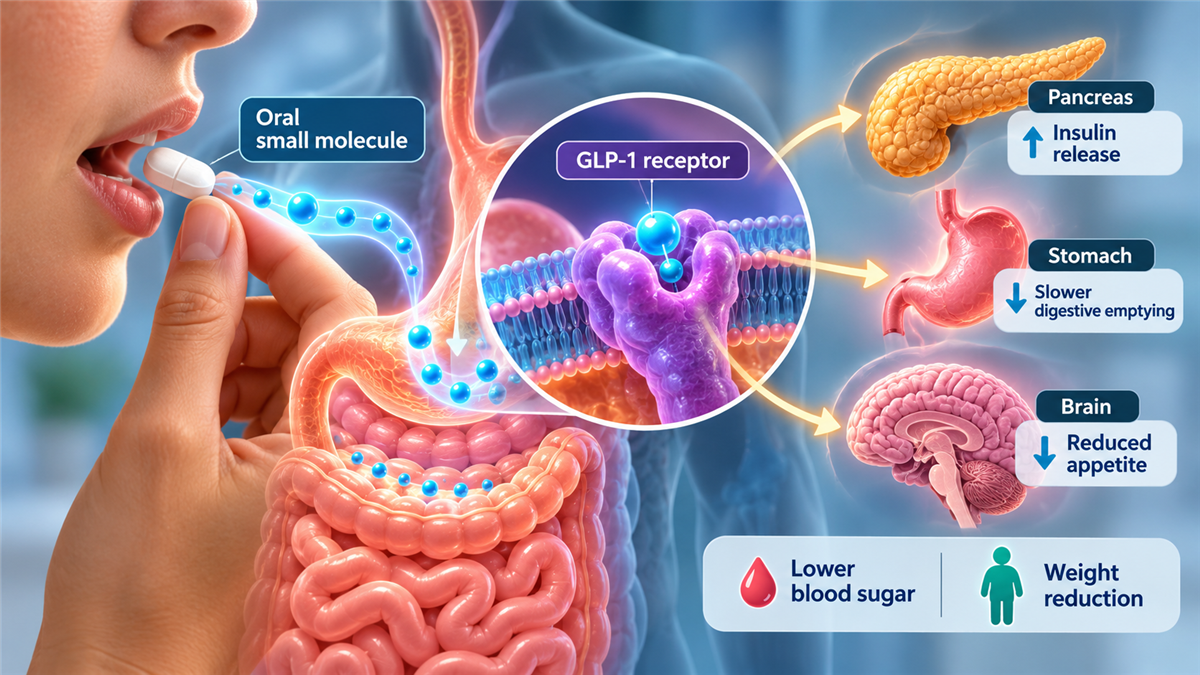
Safiglipron is a small-molecule agonist of the GLP-1 receptor. Unlike peptide GLP-1 medicines, which are usually injected or require special oral formulations, a small molecule can be made as a conventional tablet. In the study it was taken once daily without specific fasting or meal-timing restrictions.
The randomised, double-blind trial enrolled 284 adults in China whose type 2 diabetes was being managed with diet and exercise alone. Participants received 30 mg, 60 mg or 90 mg of safiglipron, or placebo, for 32 weeks, followed by a 20-week extension.
At week 32, placebo-adjusted reductions in HbA1c were 1.22 percentage points with 30 mg, 1.20 points with 60 mg and 1.45 points with 90 mg. Participants also lost weight, with larger average reductions at the higher doses.
Gastrointestinal effects, including nausea and diarrhoea, are important when evaluating GLP-1 medicines. The trial was relatively short and involved people with early diabetes at sites in one country, so broader and longer studies are needed to understand durability, safety and how well the results apply to other populations.
Safiglipron remains investigational and has not received regulatory approval. The observed glucose and weight changes do not establish that the drug prevents heart attacks, kidney disease or death; those outcomes require dedicated longer-term evidence.
OUTSTAND-1 supports the potential of an easy-to-take small-molecule GLP-1 tablet, but clinical benefit and safety must be confirmed across the wider Phase 3 programme and regulatory review.