
A new experimental medicine has improved recovery after ischemic stroke in a large randomized clinical trial, raising the possibility of a future treatment that could help some patients even many hours after a stroke begins.
The study, published in JAMA, included 997 people with acute ischemic stroke.
Participants were randomly assigned to receive either the experimental drug loberamisal or a placebo, in addition to their usual stroke care.
Treatment was started within 48 hours after the stroke began.
What is an ischemic stroke?
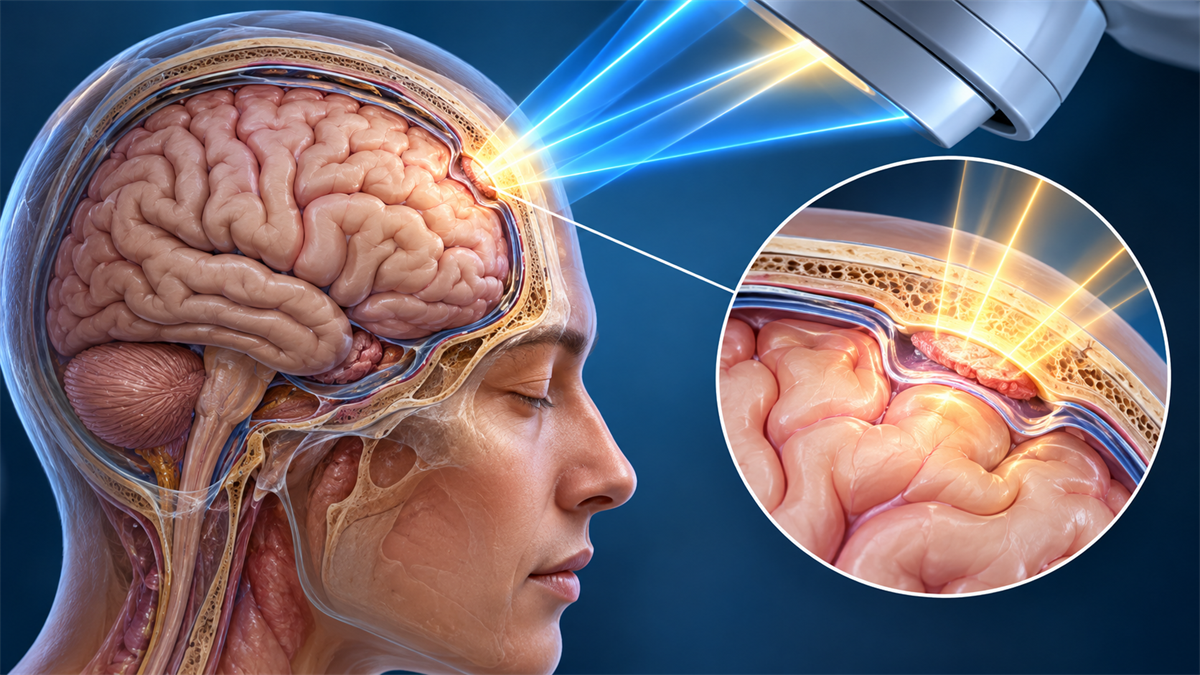
An ischemic stroke happens when the blood supply to part of the brain becomes blocked, usually by a blood clot.
Without enough blood and oxygen, brain cells in the affected area begin to become injured.
Modern stroke treatment therefore focuses heavily on restoring blood flow as quickly as possible.
For eligible patients, clot-dissolving medicines can be given during the early hours after a stroke.
Some patients with blockage of a large brain artery can also undergo mechanical thrombectomy, in which doctors use a catheter to physically remove the clot.
Both treatments can be extremely effective, but they are highly time-sensitive and are not suitable for every patient.
What is different about loberamisal?
Loberamisal is being investigated as a neuroprotective treatment.
Instead of primarily trying to remove or dissolve the clot, the aim of a neuroprotective medicine is to reduce injury to vulnerable brain tissue after a stroke.
Scientists have investigated neuroprotective drugs for decades, but translating promising laboratory results into clear benefits for patients has been difficult.
That makes a positive randomized trial in almost 1,000 patients particularly noteworthy.
What did the trial find?
Researchers assessed how well patients were functioning 90 days after their stroke.
Among people who received loberamisal, 69.7% had little or no remaining disability at 90 days.
Among those receiving placebo, the figure was 56.3%.
That represents an absolute difference of roughly 13 percentage points between the groups.
The study therefore found significantly better functional recovery among patients assigned to loberamisal.
Why is the treatment window interesting?
Many established treatments for ischemic stroke are extremely time-sensitive.
In this study, loberamisal could be started within 48 hours after stroke onset, and the typical patient began treatment considerably later than the narrow early window used for clot-dissolving treatment.
If this benefit is confirmed, a treatment that remains useful many hours after a stroke could potentially reach patients who arrive too late for some existing interventions.
That possibility could be particularly important in places where patients face delays reaching specialist stroke services.
Does this mean stroke treatment can now wait for 48 hours?
Absolutely not.
Anyone who develops symptoms suggesting a stroke still needs emergency medical assessment as quickly as possible.
Established treatments such as clot-dissolving therapy and mechanical thrombectomy are strongly dependent on time.
The new trial does not justify delaying hospital treatment while waiting to see whether symptoms improve.
The 48-hour period refers to the experimental treatment window studied for loberamisal. It is not a new general treatment window for stroke.
Is loberamisal now an established stroke treatment?
No.
This is a promising randomized trial, but further confirmation is necessary.
The study was conducted in China, and the results need to be reproduced across broader populations and healthcare systems.
The participants also predominantly had mild-to-moderate strokes.
Further trials are therefore needed to determine which patients benefit most, confirm safety and effectiveness, and establish whether the findings apply to broader groups of stroke patients.
Why does this study matter?
Attempts to protect brain tissue after stroke have repeatedly produced disappointing results in human trials.
A neuroprotective drug that genuinely improves functional recovery could therefore represent an important additional approach to stroke treatment.
Rather than replacing treatments that restore blood flow, such a medicine could potentially become an additional treatment used alongside modern stroke care.
But that possibility still needs confirmation.
Evidence so far
Promising randomized clinical-trial evidence — further confirmation is required before this becomes established stroke treatment
The trial was relatively large, randomized and placebo-controlled, making the findings substantially stronger than an observational study or early uncontrolled experiment.
However, replication in broader patient populations is essential before loberamisal can be considered an established treatment.