
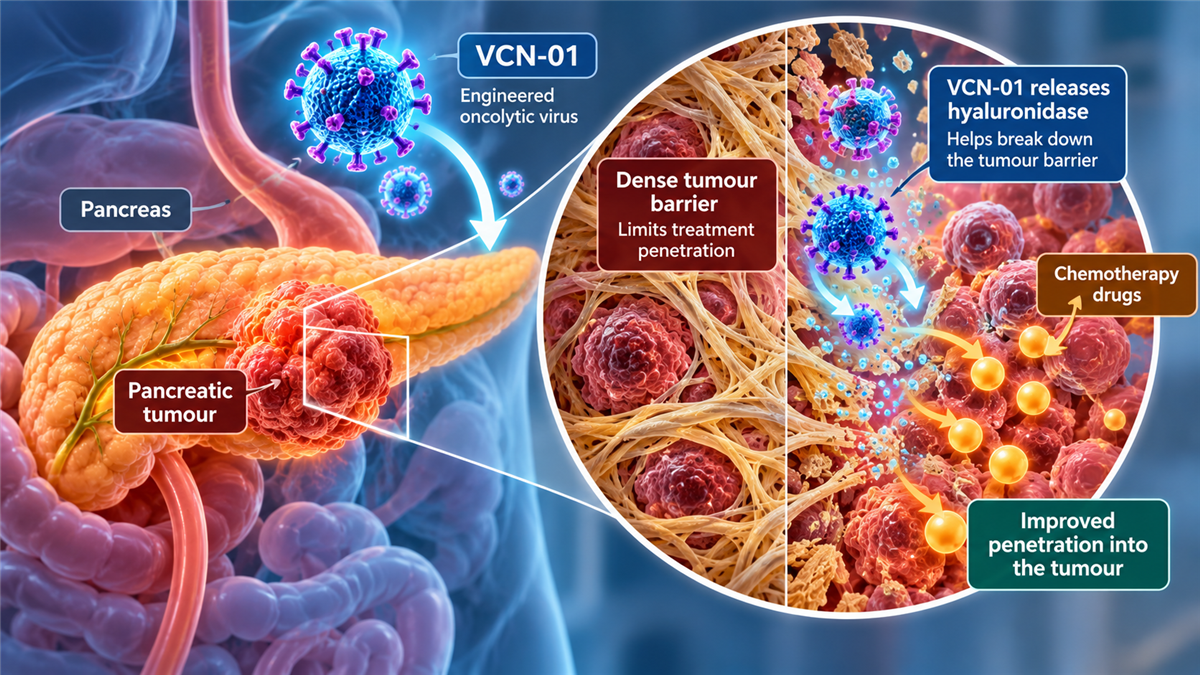
An engineered oncolytic virus called VCN-01 has shown encouraging results when added to gemcitabine and nab-paclitaxel chemotherapy for previously untreated metastatic pancreatic ductal adenocarcinoma. The findings come from the randomised Phase 2b VIRAGE trial published in Nature Medicine.
Pancreatic cancer is difficult to treat partly because tumour cells are surrounded by a dense supporting material, or stroma, that can limit how well medicines penetrate the tumour. VCN-01, also called zabilugene almadenorepvec, is designed to infect tumour cells and produce hyaluronidase, an enzyme that breaks down part of this physical barrier.
The trial's intention-to-treat population included 101 participants: 53 assigned to VCN-01 plus chemotherapy and 48 to chemotherapy alone. Median overall survival was 10.6 months with VCN-01 and 8.6 months with chemotherapy alone. However, the hazard ratio was 0.69 with a 95% confidence interval of 0.42 to 1.12, and P=0.196.
That intention-to-treat overall-survival difference was not statistically significant. The trial therefore did not prove that VCN-01 prolongs survival for the full randomised population.
A prespecified full-analysis population that counted participants who received chemotherapy produced a stronger signal: median overall survival was 10.8 versus 8.6 months. Progression-free survival and duration of response also favoured the VCN-01 group in that analysis. These findings help justify further study but do not remove the uncertainty in the intention-to-treat result.
VCN-01-related effects more often included fever, flu-like symptoms, raised liver enzymes and reduced platelet counts. Serious VCN-01-related events occurred in some participants. Two deaths occurred during the trial, one in each treatment group, and neither was judged related to study treatment.
This was a relatively small, open-label Phase 2b study. VCN-01 remains investigational and is not an approved treatment for pancreatic cancer. A larger, blinded Phase 3 trial is needed to confirm whether the signal translates into a reliable survival benefit and to define the risks more precisely.